What Is Visualization Meditation?
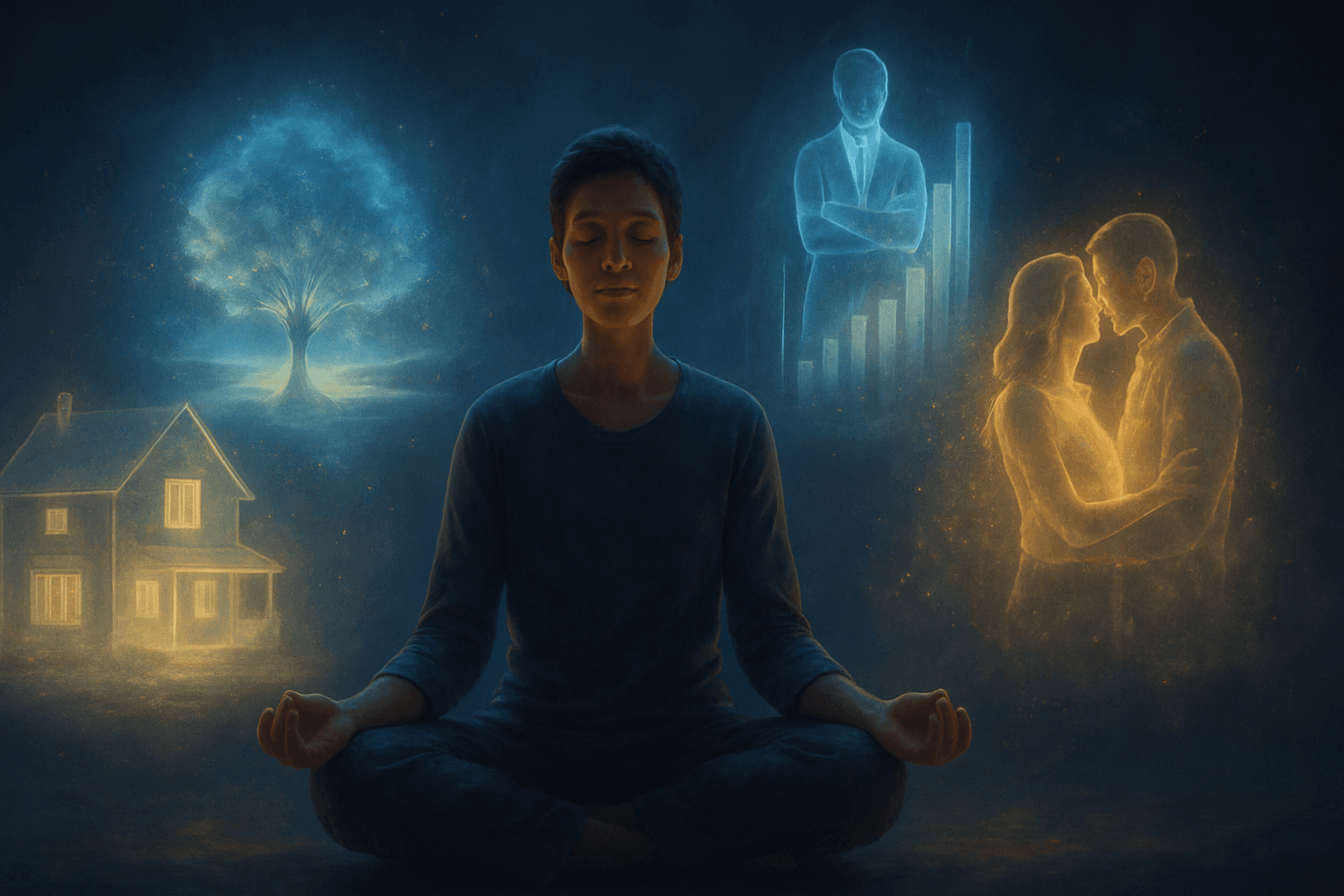
Visualization meditation is a focused mental practice where you create vivid, detailed mental images of your desired outcomes while in a relaxed, meditative state. Unlike traditional meditation, which typically focuses on emptying the mind or observing thoughts, visualization meditation is active, you deliberately construct mental imagery. It is the foundation beneath most other manifestation techniques.
This practice combines two powerful techniques: the calming, brain-state-shifting effects of meditation with the goal-programming power of visualization. The result is a deeply immersive experience that rewires your subconscious far more effectively than either technique alone.
Elite athletes, Olympic coaches, and peak-performance psychologists have used guided visualization for decades. Michael Phelps famously visualized every detail of his races, including things going wrong , before every competition. Now, this same technique is accessible to anyone with a quiet space and five minutes.
The Neuroscience of Visualization
Step-by-Step Visualization Meditation Guide
Follow this guide for your first visualization meditation session. With practice, the process becomes natural and you can adapt it freely.
Step 1: Prepare Your Space (1 minute)
- Find a quiet, comfortable place where you won't be interrupted
- Sit upright or lie down, whatever helps you stay relaxed but alert
- Silence your phone and close your eyes
- Optional: play soft ambient music to set the mood
Step 2: Enter a Meditative State (2 minutes)
Take 5 slow, deep breaths. Inhale through your nose for 4 counts, hold for 4, exhale through your mouth for 6. With each exhale, feel your body releasing tension.
Do a quick body scan: relax your forehead, jaw, shoulders, hands. Let gravity hold you. You're not trying to think about nothing , you're simply calming your nervous system so your mind becomes receptive.
Step 3: Set Your Intention (30 seconds)
Choose one specific goal or outcome to visualize. Don't try to visualize everything at once. Think: "I am going to experience what it feels like to [your goal]."
Step 4: Build the Scene (3–5 minutes)
This is the core of the practice. Create a vivid mental movie of your desired outcome, engaging all five senses:
- Sight: What do you see? Colors, light, surroundings, people. Make it as detailed as a movie scene.
- Sound: What do you hear? Conversations, music, nature, applause.
- Touch: What textures do you feel? The warmth of sunlight, a handshake, the leather of a car seat.
- Smell: Fresh coffee, ocean air, new-car scent.
- Emotion: Most importantly, how do you feel? Pride, gratitude, excitement, peace, love.
Step 5: Anchor and Release (1 minute)
Hold the peak emotional state for a few breaths. Then take one deep breath, mentally say "This is my reality," and slowly open your eyes. Carry that feeling into your day.
Guided Visualization vs. Self-Directed
There are two main approaches to visualization meditation:
Self-Directed Visualization
You create your own mental imagery in real-time. This is more personal and flexible, but requires practice to maintain focus. Best for experienced meditators or people with naturally vivid imaginations.
Guided Visualization
You follow audio or video cues that guide your imagery. This is perfect for beginners because it provides structure and prevents your mind from wandering. This is exactly what a mind movie does, it provides the visual and auditory cues (images, affirmations, music) while you supply the emotional engagement.
Common Visualization Mistakes
- Watching from third person:Don't observe yourself from outside. See through your own eyes, first person. This creates much stronger neural activation.
- Skipping the emotion: Visuals without feeling are just daydreaming. The emotion is what programs your subconscious.
- Visualizing too many things: One goal per session. Depth beats breadth.
- Trying too hard:If you're straining to see images, you're in the wrong brain state. Relax first, then let images arise naturally.
- Inconsistency: A 5-minute daily practice beats a 30-minute weekly session. Integrate it into your morning routine for best results.
Enhancing Your Practice With Technology
Modern tools can dramatically improve your visualization meditation practice. ManifestVisioncreates a personalized guided visualization video from your goals, complete with AI-generated affirmations, matching imagery, and ambient music. It's like having a personal meditation guide tailored to your specific dreams.
Instead of struggling to maintain mental imagery on your own, you watch a cinematic visualization that does the heavy lifting, freeing you to focus entirely on the emotional engagement that makes visualization truly powerful.
Create Your Guided Visualization
Turn your goals into a personalized visualization video, AI-crafted affirmations, imagery, and music designed for your daily practice.
Create Your Visualization