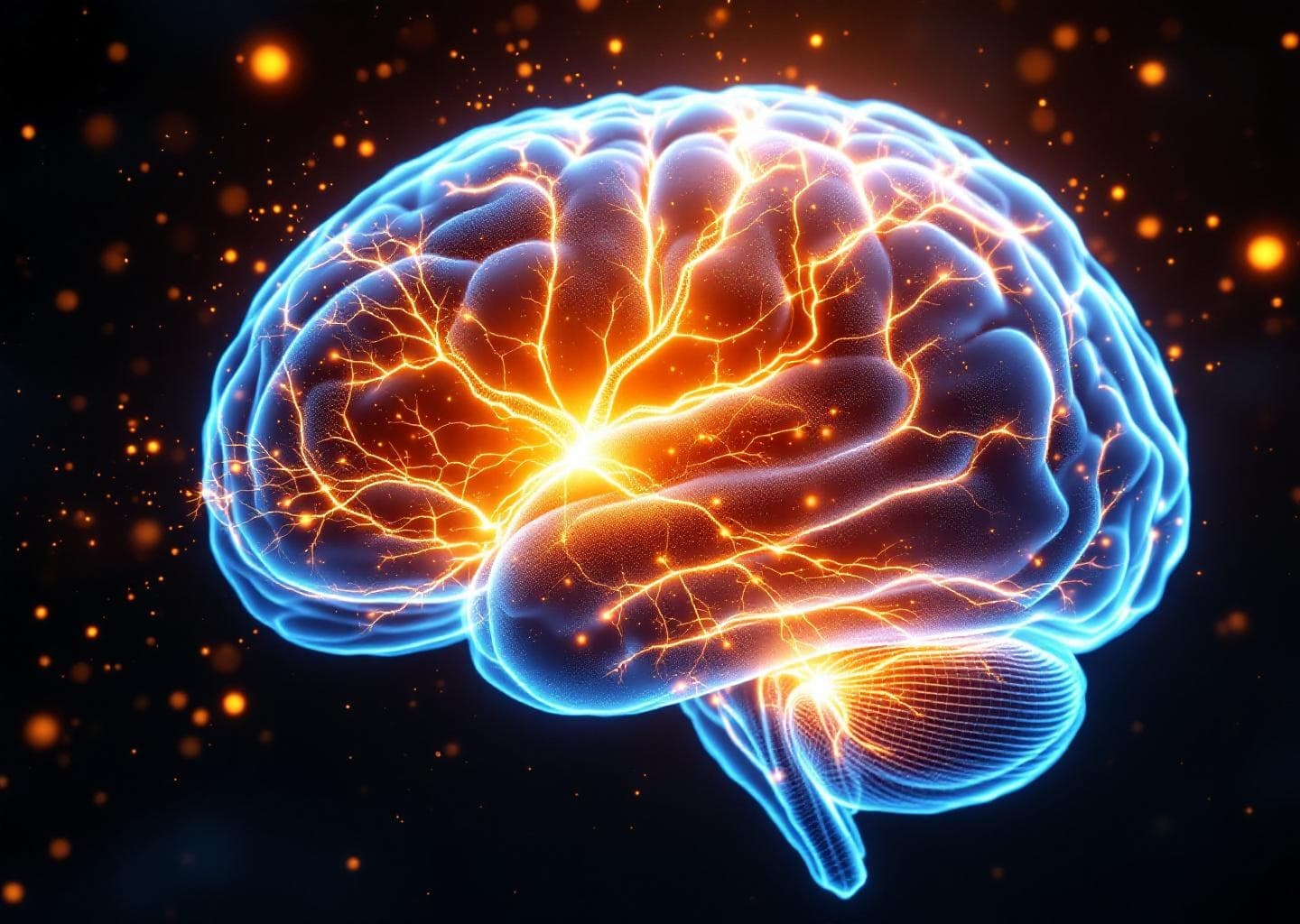
Affirmations work - but not the way most people think. Research shows they activate the brain's reward centers, reduce stress responses, and can change behavior over time. They also backfire when used incorrectly. Here is what the science actually says.
The Short Answer
Yes, affirmations work. But they are not magic words that manifest desires by repetition alone. They work by activating specific brain regions associated with self-related processing, reducing threat responses, and gradually reshaping neural pathways through neuroplasticity.
The research is clear on two points: affirmations practiced correctly and consistently produce measurable psychological and neurological changes. Affirmations practiced incorrectly can actually make you feel worse.
What the Neuroscience Shows
1. Affirmations activate the brain's reward system
A landmark 2016 study published in Social Cognitive and Affective Neuroscience used fMRI brain scans to measure what happens when people practice self-affirmation. The researchers found that affirming personal values activated the ventromedial prefrontal cortex (vmPFC) and ventral striatum - the same regions that light up when you receive a reward or experience something pleasurable.
In other words, your brain responds to meaningful affirmations the way it responds to actual positive experiences. This is not a placebo - it is a measurable neurological event.
2. Affirmations reduce the stress response
When you face a threat - whether physical or psychological - your brain activates a stress response. Self-affirmation has been shown to buffer this response. A study by Creswell et al. (2013) found that participants who practiced self-affirmation before a stressful task showed lower cortisol levels and reported less stress than a control group.
This has practical implications for manifestation: chronic stress keeps you in survival mode, where your brain focuses on threats rather than possibilities. Affirmations help shift you out of that state, making visualization and goal-oriented thinking more accessible.
3. Neuroplasticity makes affirmations cumulative
Every thought you think strengthens its associated neural pathway. Think the same thought repeatedly, and that pathway becomes your brain's default. Neuroplasticity research confirms that the brain physically reorganizes in response to repeated experience - including repeated thought patterns.
This is why consistency matters more than intensity. A brief affirmation practice every morning for 30 days creates stronger pathways than an intense one-time session. The brain rewards repetition, not effort.
When Affirmations Backfire
Not all affirmation research is positive. A well-known 2009 study by Wood, Perunovic, and Lee found that for people with low self-esteem, repeating "I am a lovable person" actually made them feel worse.
Why? When an affirmation conflicts too strongly with your current self-concept, your brain registers the contradiction. Instead of accepting the new belief, it highlights the gap between where you are and where the affirmation says you should be.
The solution: bridging affirmations
Rather than jumping from "I am broke" to "I am wealthy," use affirmations that acknowledge your current position while pointing toward growth:
- "I am learning to manage my money wisely" instead of "I am rich"
- "I am becoming more confident every day" instead of "I am supremely confident"
- "I am open to new opportunities" instead of "I have my dream job"
As your self-concept shifts, you can gradually upgrade your affirmations to match your new baseline. This is progression, not limitation. For more on crafting effective affirmations, see how to write powerful affirmations.
How to Make Affirmations More Effective
1. Engage multiple senses
Reading affirmations silently engages language processing. Speaking them aloud adds auditory processing. Seeing matching imagery adds visual processing. Hearing them narrated by a voice adds another layer. The more senses you engage, the more brain regions are activated simultaneously.
This is the science behind mind movies - they combine text, imagery, narration, and music to create a multi-sensory affirmation experience. Research on multi-sensory integration shows this produces stronger neural responses than any single sense alone.
2. Practice at the right times
Your brain is most suggestible during two windows:
- First 20 minutes after waking - your brain transitions from theta (sleep) to alpha (relaxed awareness) before reaching beta (alert). During this transition, your subconscious is more receptive. See morning affirmations.
- Last 20 minutes before sleep - the same transition happens in reverse. Your conscious mind relaxes, allowing affirmations to reach deeper processing. See bedtime affirmations.
3. Combine with emotion
Affirmations paired with genuine emotion are significantly more effective than flat repetition. When you feel the truth of your affirmation - not just think it - you activate emotional processing centers that strengthen the neural imprint.
This is why visualization meditation is more powerful than silent reading. When you see, hear, and feel your desired reality simultaneously, the brain encodes it more deeply.
4. Be specific
Generic affirmations ("I am successful") produce weaker neural responses than specific ones ("I am earning $10,000/month from my consulting business while working 30 hours per week"). Specificity gives your brain a concrete target to orient toward.
5. Practice consistently for at least 21 days
Neuroplasticity research suggests new neural pathways begin forming within days but take 21-66 days to become automatic. Commit to a minimum of 21 consecutive days before evaluating results. See how to stay consistent.
Make Your Affirmations Multi-Sensory
AI creates a visualization video from your affirmations - with matching images, voice narration, and music. Engages more brain regions than reading text alone.
Create My Vision Board Video FreeThe Research Summary
| Finding | Source | Key Takeaway |
|---|---|---|
| Self-affirmation activates reward centers | Cascio et al. (2016) | Affirmations produce measurable brain activation and predict behavior change |
| Affirmations reduce cortisol | Creswell et al. (2013) | Self-affirmation buffers the stress response |
| Affirmations backfire with low self-esteem | Wood et al. (2009) | Use bridging affirmations that match current self-concept |
| Multi-sensory stimuli strengthen encoding | Calvert et al. (2004) | Engaging multiple senses creates stronger neural imprints |
| Neural pathways form through repetition | Neuroplasticity research | Consistency (21-66 days) is required for lasting change |
Bottom Line
Affirmations are not wishful thinking. They are a practice that produces measurable changes in brain activity, stress hormones, and behavior - when done correctly. The key principles: be specific, engage emotion, use multiple senses, bridge the gap between current and desired self-concept, and practice consistently for at least three weeks.
The most effective modern approach combines written, spoken, and visual affirmations into a daily multi-sensory experience. That is exactly what a mind movie does - and why neuroscience-informed practitioners increasingly use video-based visualization alongside traditional affirmation practice.
Experience Science-Backed Affirmations
AI writes personalized affirmations, generates matching visuals, narrates them aloud, and adds music. Multi-sensory affirmation practice, backed by neuroscience.
Create My Affirmation Video FreeFrequently Asked Questions
- Do affirmations actually work?
- Yes, with caveats. Research shows affirmations work best when they align with your existing self-concept and are practiced consistently. A 2016 study in Social Cognitive and Affective Neuroscience found that self-affirmation activates the brain's reward centers (ventral striatum and ventromedial prefrontal cortex). However, affirmations that feel too far from your current reality can backfire by highlighting the gap between where you are and where you want to be.
- How long do affirmations take to work?
- Most research suggests 3-4 weeks of daily practice to notice measurable changes in mindset and behavior. Neuroplasticity studies show that new neural pathways begin forming within days but take roughly 21-66 days to become habitual patterns. Consistency matters more than duration - brief daily sessions outperform occasional long sessions.
- Can affirmations change your brain?
- Yes. Neuroimaging studies show that self-affirmation activates the ventromedial prefrontal cortex and ventral striatum - areas associated with self-related processing and reward. Repeated affirmation practice strengthens these neural pathways through neuroplasticity, the brain's ability to reorganize itself based on experience.
- Why do affirmations not work for some people?
- Affirmations can backfire when they conflict too strongly with your current self-image. If you deeply believe 'I am broke' and repeat 'I am wealthy,' your brain registers the contradiction and can actually reinforce the negative belief. The solution is to use bridging affirmations that feel achievable, like 'I am learning to manage my money wisely' before jumping to 'I am wealthy.'
- Are written or spoken affirmations more effective?
- Research suggests spoken affirmations are slightly more effective because they engage auditory processing in addition to language processing. Hearing your own voice (or a recorded voice) speak the affirmation activates more brain regions than reading silently. Combining both - seeing the words while hearing them spoken - provides the strongest multi-sensory reinforcement.